The healthcare sector is undergoing a revolutionary transformation driven by advancements in technology, particularly in AI robotics. As we progress through 2026, the integration of artificial intelligence and robotics is reshaping patient care, improving operational efficiencies, and enhancing diagnostic capabilities. This article delves into the current applications of AI robotics in healthcare, explores the future of AI robotics, and highlights actionable insights for stakeholders in the industry.
Understanding AI Robotics in Healthcare
AI robotics refers to the combination of artificial intelligence and robotic systems that enhance the capabilities of machines to perform tasks traditionally carried out by humans. In healthcare, this technology is being harnessed to improve patient outcomes, streamline workflows, and reduce costs. The applications range from surgical robots that assist surgeons in complex procedures to robotic exoskeletons that help patients regain mobility.
The integration of AI robotics in healthcare is not just a trend; it is becoming a necessity as healthcare providers seek to address challenges such as rising patient demands, staff shortages, and the need for precision in treatment. For instance, robotic surgical systems like the da Vinci Surgical System enable minimally invasive surgeries with enhanced precision, resulting in quicker recovery times and reduced hospital stays.
Benefits of AI Robotics in Healthcare
The incorporation of AI robotics in healthcare offers numerous benefits:
- Enhanced Precision: Robotic systems can perform delicate tasks with greater accuracy than human hands, minimizing the risk of complications during surgery.
- Improved Efficiency: AI algorithms can analyze vast amounts of data quickly, aiding in faster diagnostics and treatment plans.
- Increased Access: Robotics can facilitate remote surgeries and consultations, making healthcare more accessible, especially in underserved areas.
- Personalized Care: Machine learning algorithms can tailor treatments based on individual patient data, leading to better health outcomes.
Top Trends in AI Robotics for 2026
As we look towards the future, several key trends are emerging in the field of AI robotics within healthcare. These trends are set to redefine how care is delivered and how healthcare systems operate.
1. Growth of Telemedicine and Remote Robotics
The demand for telemedicine has surged, especially in the wake of the COVID-19 pandemic. AI robotics is playing a crucial role in enabling remote consultations and robotic surgeries. Surgeons can now perform operations from thousands of miles away using robotic systems equipped with AI technologies.
- Robotic Telepresence: Robots equipped with cameras and communication tools allow doctors to interact with patients remotely, providing consultations and follow-up care without the need for physical presence.
- Remote Surgical Systems: Technologies like the Versius Surgical Robotic System enable surgeons to conduct procedures remotely, offering patients access to specialized care regardless of geographic barriers.
2. Integration of Machine Learning and AI
Machine learning algorithms are increasingly being integrated into AI robotics to enhance decision-making processes. These systems can learn from vast datasets, improving their performance over time.
- Predictive Analytics: AI systems can predict patient outcomes based on historical data, allowing healthcare providers to make informed decisions about treatments and interventions.
- Automated Diagnostics: AI-powered robotics can analyze medical imaging and lab results, assisting healthcare professionals in diagnosing conditions more accurately and swiftly.
3. Enhanced Rehabilitation Robotics
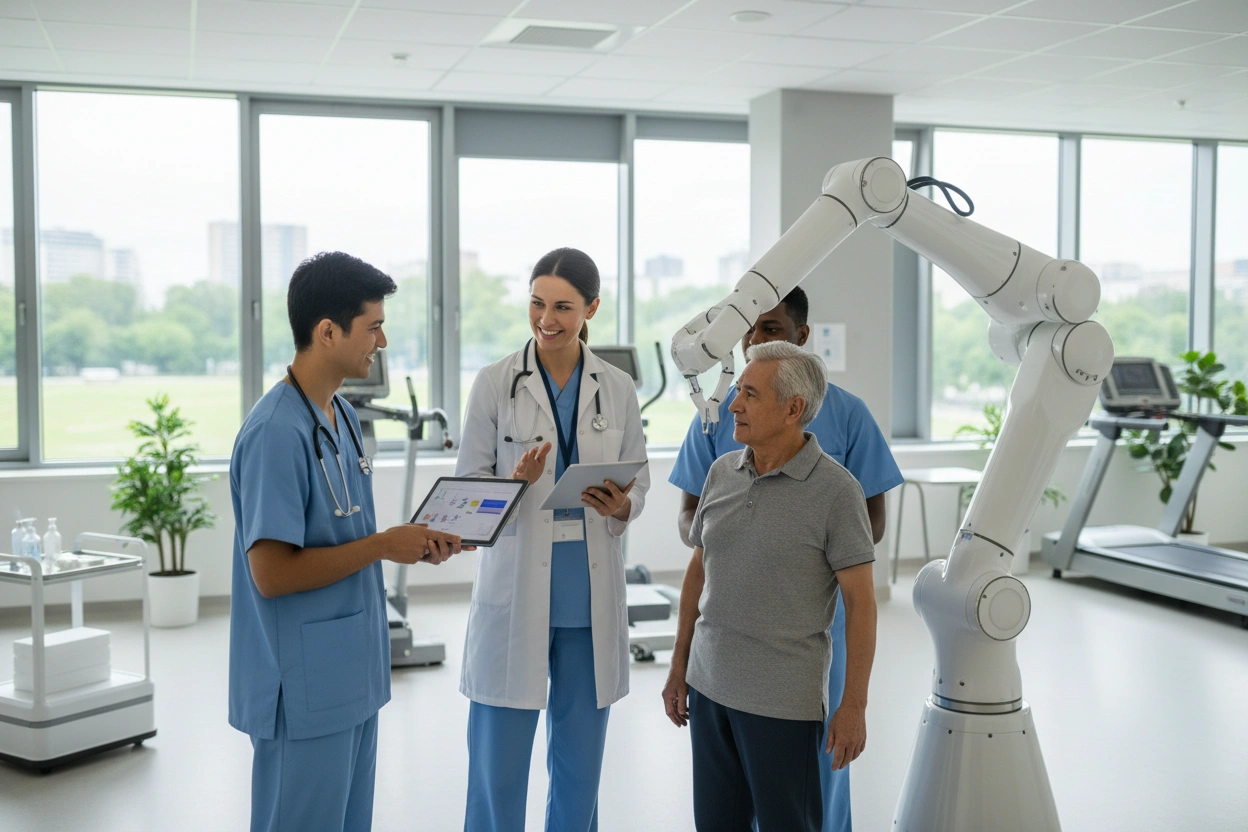
Rehabilitation robotics are gaining traction, helping patients recover from surgeries or injuries by providing support during physical therapy.
- Exoskeletons: Wearable robotic exoskeletons assist patients with mobility impairments, enabling them to regain their ability to walk and perform daily activities.
- Robotic Therapy Devices: These devices offer personalized rehabilitation exercises, adjusting to the patient's progress and ensuring optimal recovery.
4. Focus on Data Security and Ethics
As AI robotics becomes more prevalent, concerns regarding data security and ethical implications are also on the rise. Healthcare providers must ensure that patient data is protected while utilizing AI technologies.
- Regulatory Compliance: Organizations must adhere to healthcare regulations like HIPAA to safeguard patient information while using AI robotics.
- Ethical AI: The development of ethical guidelines for AI use in healthcare is crucial to prevent biases and ensure fair treatment across diverse populations.
5. Collaborative Robotics in Surgery
The use of collaborative robots, or cobots, is becoming more common in surgical settings. These robots work alongside human surgeons, enhancing their capabilities without replacing them.
- Assistance in Procedures: Cobots can handle repetitive tasks, allowing surgeons to focus on complex aspects of surgery.
- Training and Education: Cobots can also be used as training tools for medical students and residents, simulating real-life surgical scenarios.
Common Misconceptions About AI Robotics in Healthcare
Despite the advancements in AI robotics, several misconceptions persist that may hinder its acceptance and integration in healthcare settings.
Misconception 1: AI Robotics Will Replace Human Jobs
One of the most common misconceptions is that AI robotics will replace healthcare professionals. In reality, these technologies are designed to augment human capabilities rather than replace them. For example, robotic surgical systems enhance a surgeon's precision but do not eliminate the need for skilled surgeons. The collaboration between humans and machines leads to improved outcomes and efficiency.
Misconception 2: AI Robotics Are Too Expensive
While the initial investment in AI robotics can be significant, the long-term benefits often outweigh the costs. Improved patient outcomes, reduced hospital stays, and increased operational efficiency can lead to substantial cost savings over time. Moreover, many healthcare providers are beginning to see the return on investment as patient demand for advanced care increases.
Misconception 3: AI Robotics Are Not Reliable
Concerns about the reliability of AI robotics are common, particularly regarding their decision-making capabilities. However, with advancements in machine learning and data analytics, these systems have demonstrated high reliability in various applications. Continuous monitoring and updates ensure that AI robotics maintain accuracy and adapt to new information.
Actionable Insights for Healthcare Stakeholders
To harness the potential of AI robotics effectively, healthcare stakeholders must adopt strategic approaches. Here are several actionable insights:
Invest in Training: Equip healthcare professionals with the necessary training to work alongside AI robotics. This includes understanding how to operate robotic systems and interpret data generated by AI.
Embrace Interdisciplinary Collaboration: Encourage collaboration between IT specialists, healthcare providers, and engineers to create integrated solutions that meet the unique needs of healthcare settings.
Focus on Patient-Centric Solutions: Design AI robotics applications with the patient experience in mind. Solicit feedback from patients and healthcare professionals to ensure that technologies meet their needs.
Stay Informed on Regulatory Changes: Keep abreast of regulations affecting AI and robotics in healthcare. Compliance is essential to safeguard patient data and maintain trust.
Pilot New Technologies: Before full-scale implementation, conduct pilot programs to test new AI robotics technologies. Gather data on their effectiveness and make adjustments as necessary.
The Future of AI Robotics in Healthcare
As we advance further into 2026, the future of AI robotics in healthcare looks promising. The continued evolution of technology, coupled with an increasing acceptance of AI-driven solutions, is set to enhance patient care significantly. Healthcare providers that proactively adopt and integrate AI robotics into their operations will not only improve efficiency but also position themselves as leaders in the industry.
The potential for AI robotics to transform healthcare is immense, from improving surgical outcomes to enhancing rehabilitation efforts. As stakeholders navigate this evolving landscape, it is crucial to remain adaptable and open to innovation.
The Intersection of AI Robotics and Healthcare Innovation
In exploring the applications of AI robotics in healthcare, it is evident that this technology holds the key to numerous advancements that can significantly improve patient care and operational efficiency. As we continue to embrace these innovations, companies like Outer Edge are at the forefront, providing the insights and tools necessary to leverage AI robotics effectively.
By staying informed about the latest trends and applications in AI robotics, healthcare professionals can better prepare for the future of healthcare. If you're looking to implement cutting-edge technologies in your healthcare practice, consider how Outer Edge can help you navigate this landscape. Stories for the Future 2024 can provide valuable insights into the evolving role of technology in healthcare.
For more information on how to networking opportunities for AI robotics professionals, contact Outer Edge today. Let us assist you in transforming your healthcare delivery for a better tomorrow.




.svg)






.png)


